Why I built this
I've been building software professionally for more than 20 years, with Rails, Django, Phoenix and many other frameworks. I was an early Rails user, from the days of DHH's 15-minute blog screencast, and in 2007 I wrote a book chapter on it and taught a course based on it. Some of the Rails apps and sites I run are great, but they use a ton of memory. Even an internal tool like Fizzy uses 500 MB or more of RAM, just for a kanban board. Now that AI makes it easier, I started exploring better options, in Go, Rust, Kotlin, Java and Elixir. I wanted something elegant that I could build and maintain with the help of AI. I didn't love Rust at first, but LLMs wrote good Rust quickly, and the gains were real: on my machine, my port of Fizzy uses about 20x less memory than the Rails version. DHH's Rails World 2026 keynote, where he said agents like Rust, pushed those experiments into a full framework. I've been building and experimenting with it in my free time, with a lot of different agents, and so far I'm very happy with the results.
What you get isn't a framework to ride on. It's directions for your agent: the crates I'd pick, plus tested reference code for things like job processing, presence and authenticated webhooks, in the samples repo. Everything is copied into your app, so nothing is hidden and you own it. Take what's useful and skip the rest. I try to be strict about testing and verification, and to make the day-to-day easy: deploying is one command, and a local mailbox and a dev dashboard let you click through every flow, sign-up emails included. My goal is an extreme developer experience, high performance, a small memory footprint and efficient token use, so that even smaller models (I'm testing GPT-6 Luna, Muse Spark and Claude Sonnet) can build high-quality, fast apps.
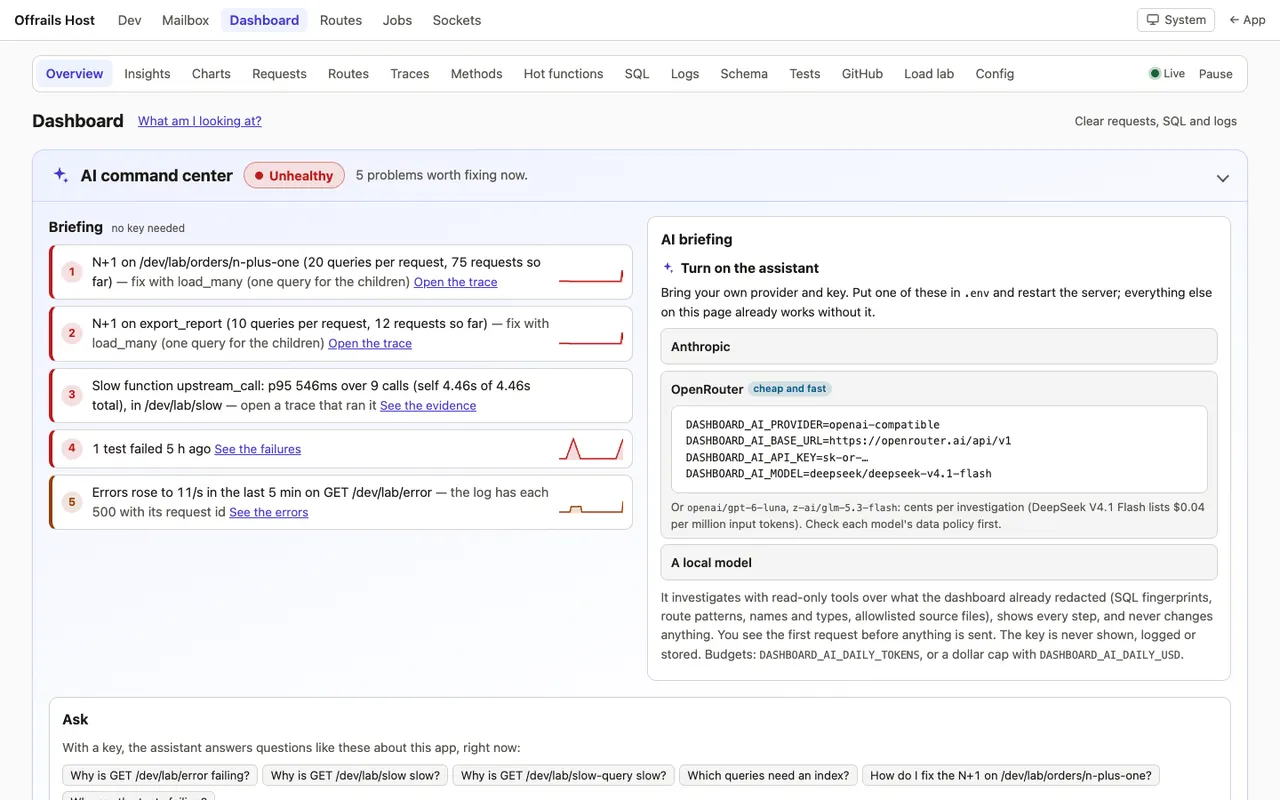
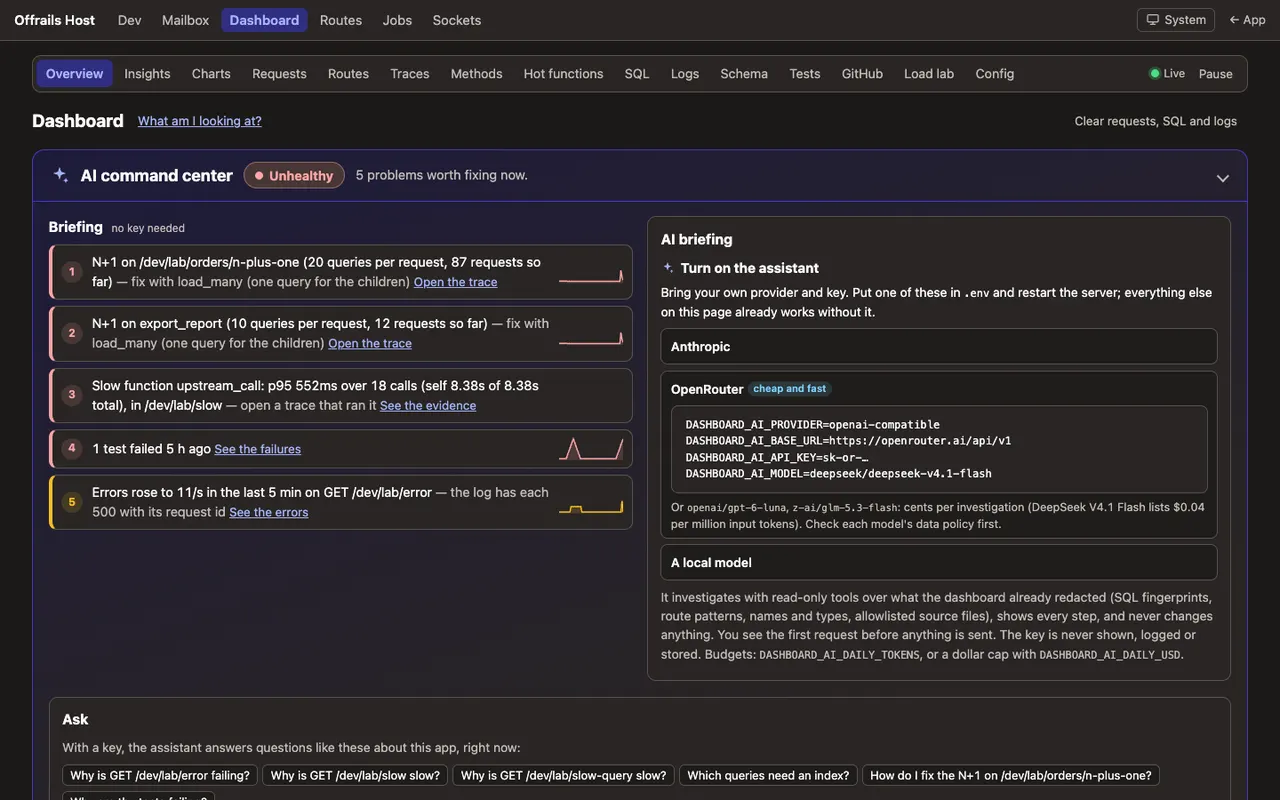
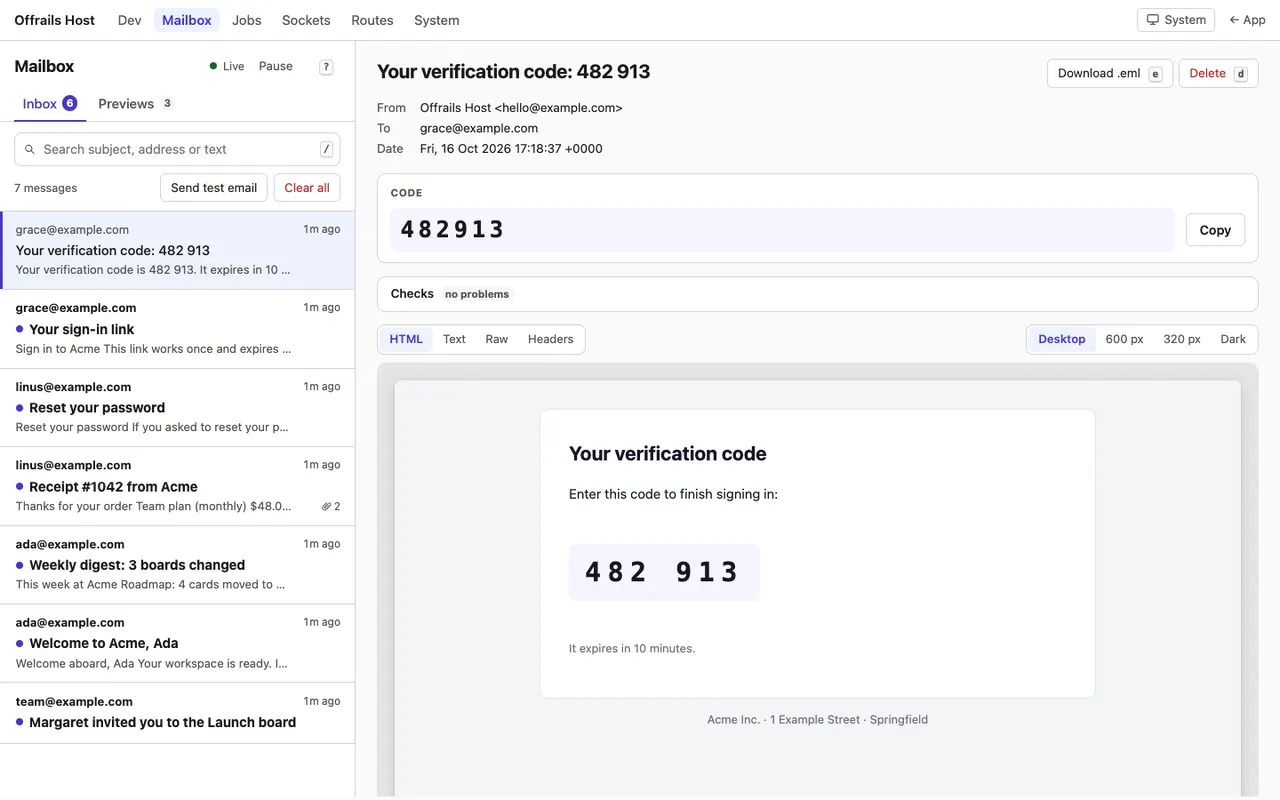

Two of the parts, from the samples. Every screen, light and dark, is in the samples repo, and the parts page lists them all.
If you try it, I'd like to hear how it went, especially where your agent got stuck. Feedback and contributions are welcome: pull requests, issues and discussions on GitHub (start with CONTRIBUTING.md), or just write to hello@rustoffrails.org. And if you like it, a star on GitHub helps other people find it.
Dan